Puppy Vaccine Schedule
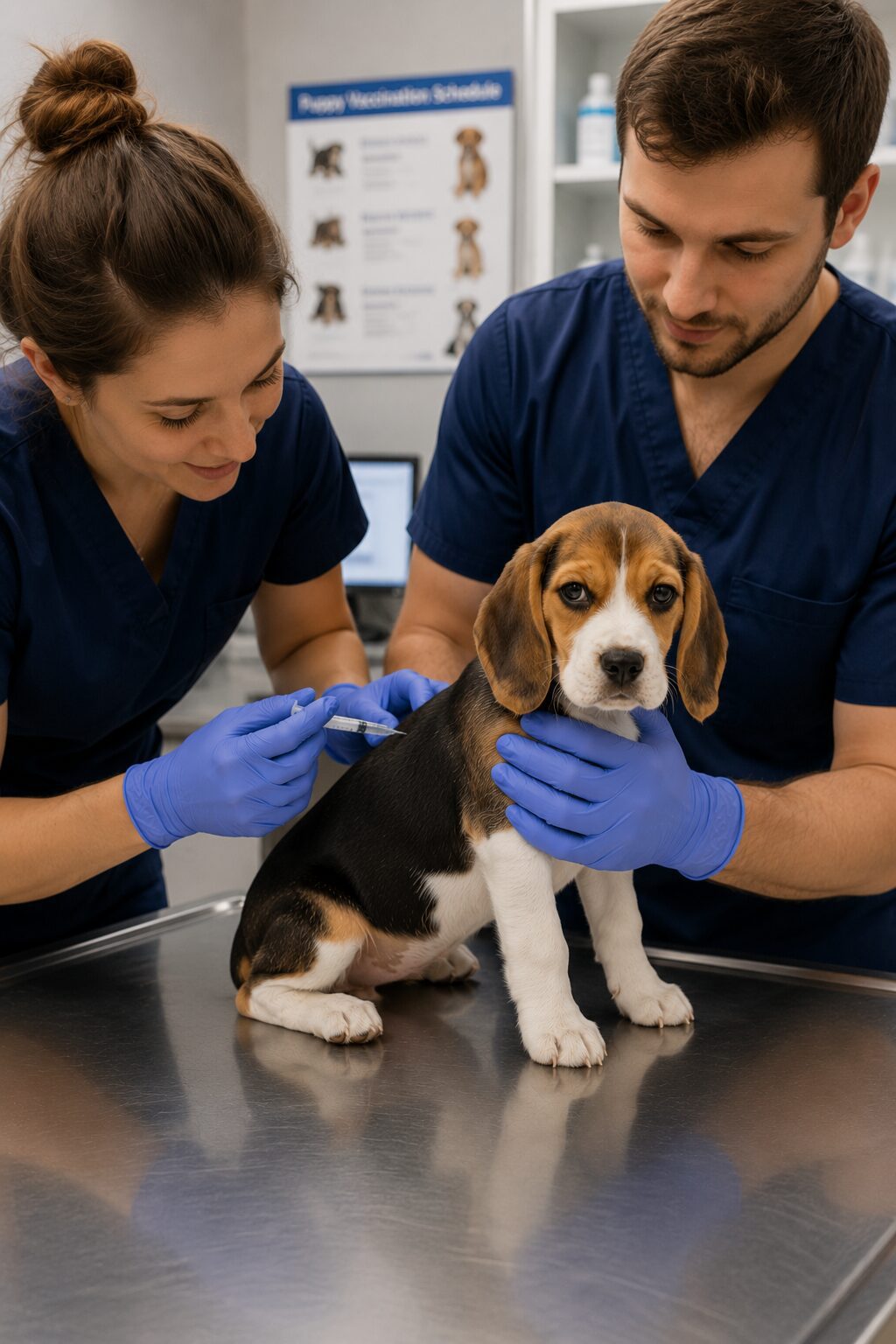
Vaccinations are one of the most important parts of protecting your new family member during their first year of life.
- Start Series at 6-9 weeks, continue until 16 weeks (4 months old)
- Booster every 3-4 weeks, until 16 weeks of age (4 vaccines total)
- If starting after 16 weeks of age, give 2 DAPP vaccines 3-4 weeks apart
- After initial series, give booster at 1 year, then every 3 years
- Start at 12 weeks, 1 dose (Initial dose lasts 1 year, then booster every 3 years)
Bordetella (Kennel Cough) - Contagious respiratory infection that can cause coughing in dogs and is commonly spread in places where dogs gather, like boarding or daycare.
- Start at 8 weeks, 1 dose (Intranasal)
- Booster every 6 months-1 year (Depends on groomer/boarding facility)
Leptospirosis - Bacterial infection dogs can get from contaminated water, soil, or urine, it can cause serious illness by affecting the kidneys and liver.
- Start at 6 weeks or older, give 2 doses, spaced 3-4 weeks apart
- Booster every year
Influenza - Contagious respiratory infection that can spread easily between dogs.
- Start at 8 weeks, give 2 doses, spaced 3-4 weeks apart
- Booster every year
Lyme - Tick-borne infection that can affect dogs, often causing fever, joint pain, and tiredness.
- Start at 8 weeks, give 2 doses spaced 3-4 weeks apart
- Booster every year.
Kitten Vaccine Schedule
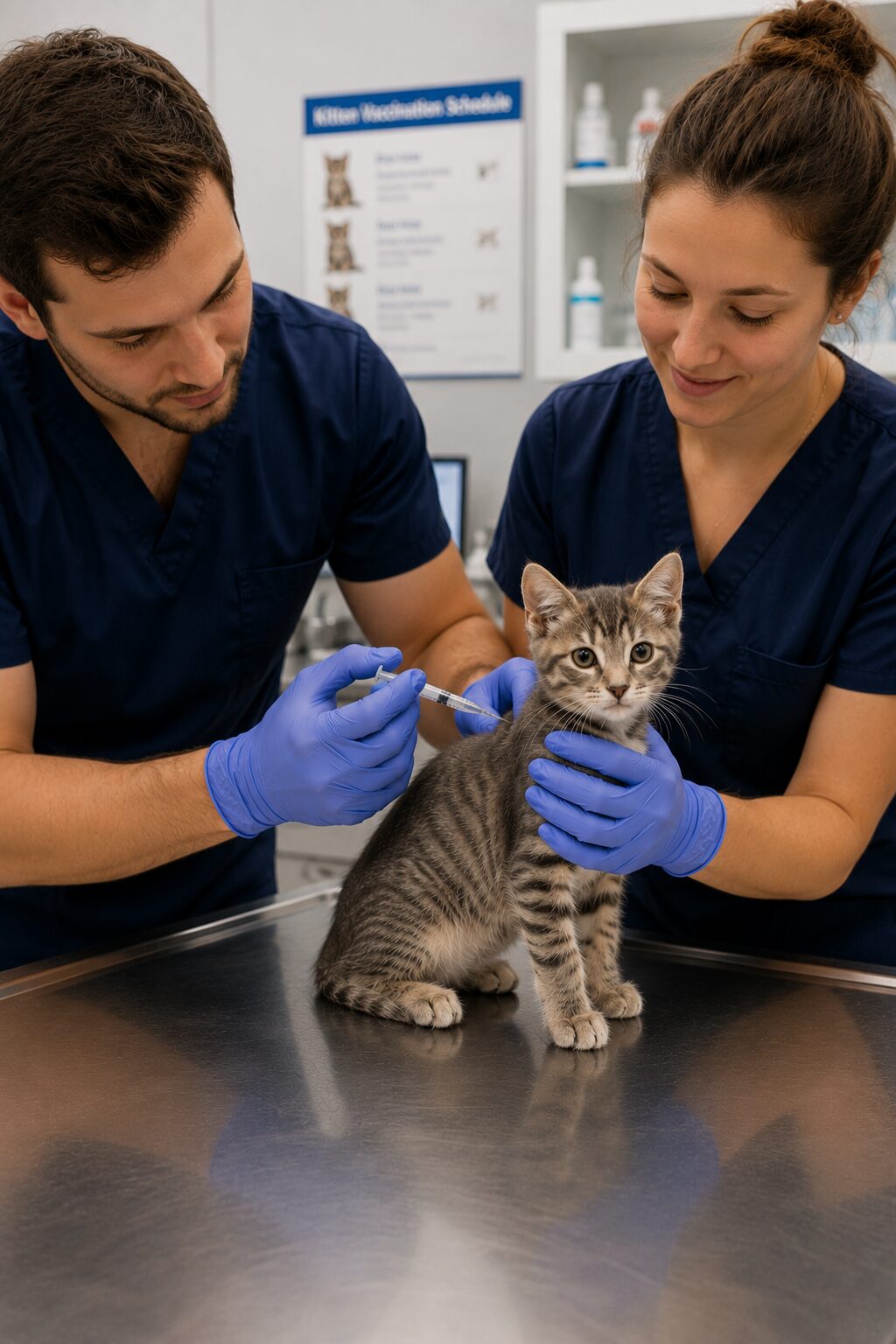
- Start series at 6-9 weeks, continue until 16 weeks (4 months) old
- Booster every 3-4 weeks, until 16 weeks of age (4 vaccines total)
- If starting after 16 weeks of age, give 2 FVRCP vaccines 3-4 weeks apart
- After initial series, give booster at 1 year, then every 3 years
Rabies - Deadly virus that affects the nervous system and is usually spread through the bite of an infected animal.
- Start at 12-16 weeks, 1 dose (initial dose lasts 1 year, then booster every 3 years)
FeLV (Leukemia) (We test for FeLV prior to administering this vaccine) - Protects cats against feline leukemia virus, a contagious infection that can weaken the immune system and lead to serious illness.
- Start at 9 weeks, 2 doses spaced 3-4 weeks apart
- Booster every 2 years based on risk

Just Get a New Pet?
If you are already an established client with us and have welcomed a new furry family member, adding them to your account is easy!
Existing clients can add their new pet by:
- Logging into the Vello Portal and submitting your pet's information.
- Completing our New Patient Registration Form.
If you're a new client to our hospital, we look forward to meeting both you and your newest family member!
Contact our team to start the onboarding process.
Helping Your New Pet Settle Into Their New Home
Moving into a new environment can be stressful for puppies and kittens. A little patience and preparation can make the transition smoother for everyone involved.
Create a Safe Space
Set up a quiet area with food, water, bedding, and toys where your pet can relax and decompress during their first few days at home.
Keep a Consistent Routine
Pets thrive on routine. Feeding, potty breaks, playtime, and bedtime should happen at approximately the same times each day whenever possible.
Introduce New Experiences Gradually
Allow your pet to experience new sights, sounds, and environments slowly and positively. Avoid overwhelming them with too many visitors or outings during the first few days.
Positive Reinforcement Goes a Long Way
Reward desired behaviors with treats, praise, and affection. Building positive associations early helps create confident and well-adjusted pets.


Important Reminders
Introducing Your New Pet to Existing Pets
Introducing a new family member should be a gradual process to set everyone up for success.
Dogs Meeting Dogs
- Introduce dogs in a neutral location whenever possible.
- Keep initial meetings brief and positive.
- Supervise all interactions closely.
- Allow each dog to have their own food, water, toys, and resting spaces initially.
Cats Meeting Cats
- Begin with separate rooms and exchange bedding or toys to allow scent introductions first.
- Allow visual introductions through doors or gates before direct contact.
- Move at your pets' pace and never force interactions.
Dogs and Cats
- Keep dogs leashed during initial introductions.
- Ensure cats always have access to elevated escape routes and safe spaces.
- Reward calm behavior from both pets.
Remember that some pets become best friends immediately, while others may take days or weeks to adjust.
Why Your Pet's First Fecal Sample Is So Important
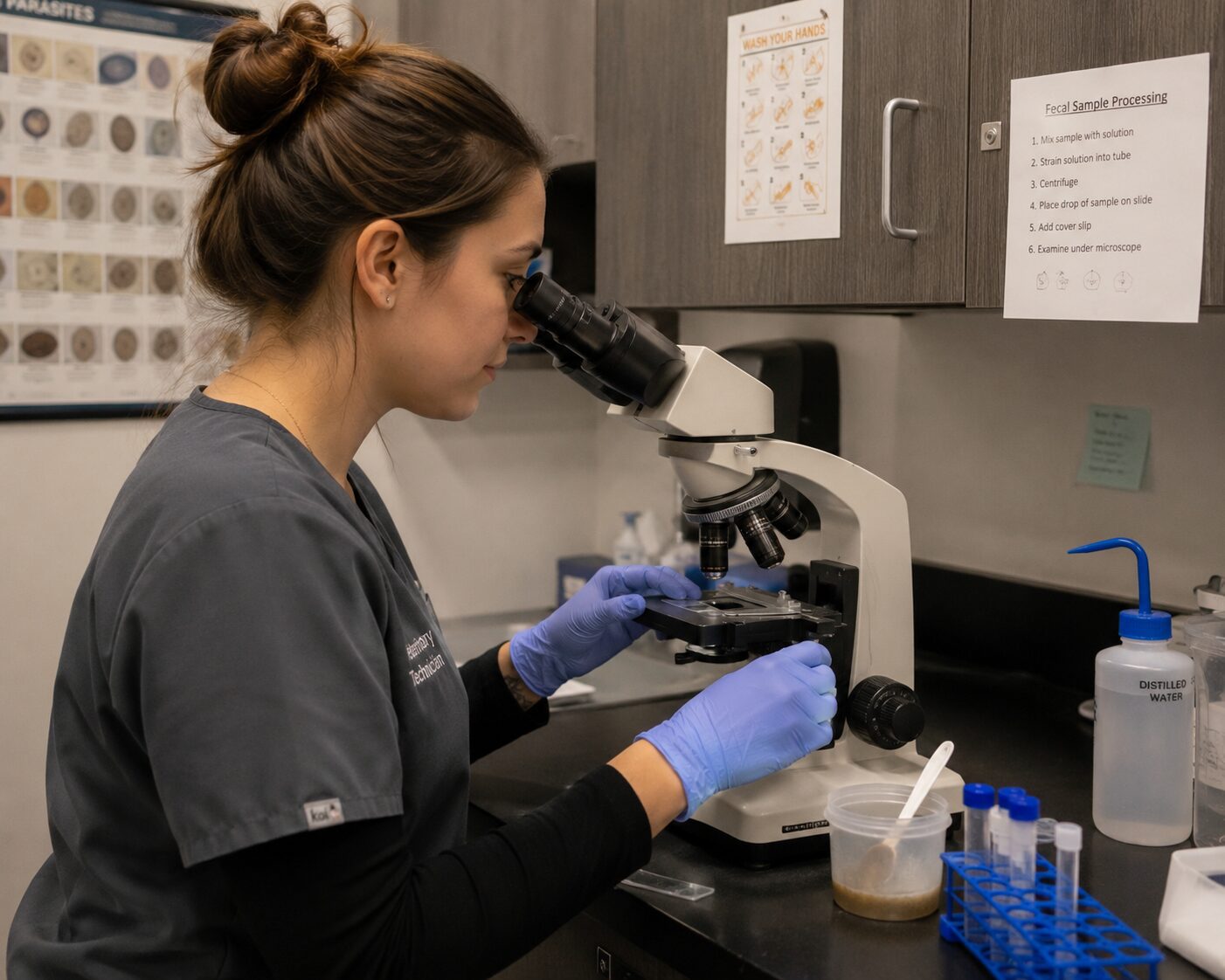
One of the most important tests we perform for new puppies and kittens is a fecal examination.
Many intestinal parasites are extremely common in young pets and can be present even if your pet appears perfectly healthy. Some pets may not show any signs of illness while still carrying parasites that can affect their growth, overall health, and even other pets in the household.
A fecal examination allows us to identify and treat parasites such as:
- Roundworms
- Hookworms
- Whipworms
- Coccidia
- Giardia
Some intestinal parasites can also be transmitted to people, making early detection especially important for households with children, elderly family members, or individuals with compromised immune systems.
For the most accurate results, please bring a fresh stool sample collected within 12 hours of your appointment whenever possible.